
Disclosure: As an Amazon Associate I earn from qualifying purchases. How this site works
Where to Buy a Hitch Lock
Each category below links to current listings on Amazon (opens in a new tab). Use this checklist to compare hitch locks before you buy.
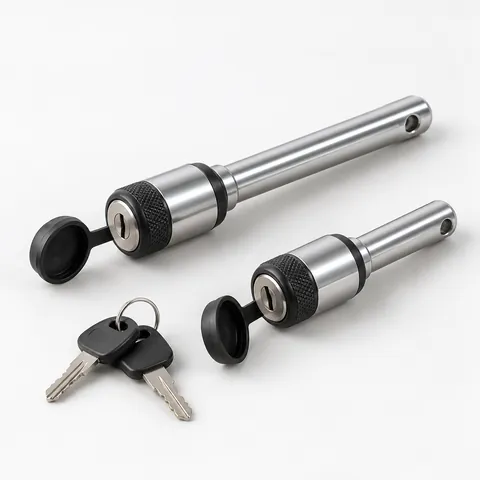 Receiver hitch pin locks
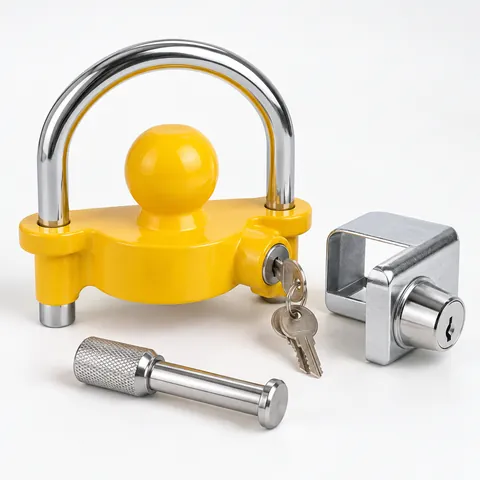 Coupler locks
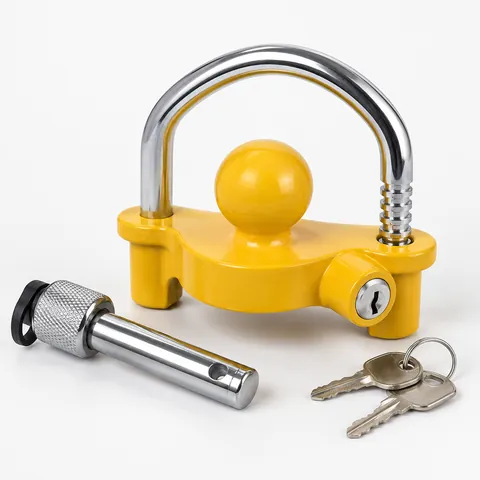 Universal trailer locks
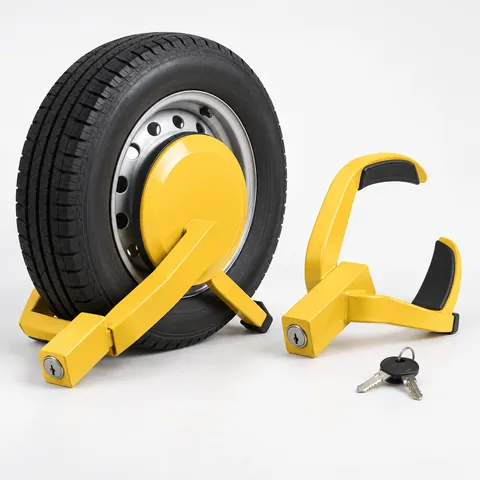 Trailer wheel locks
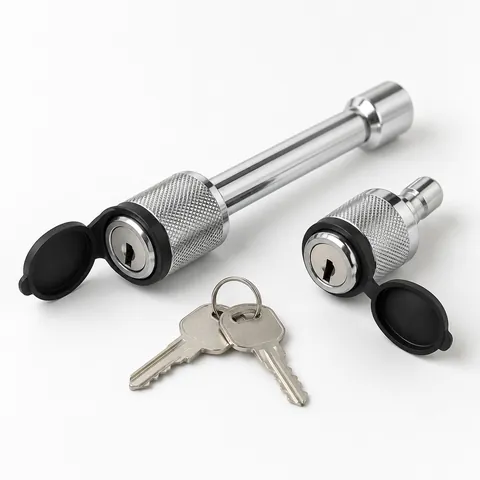 Keyed-alike hitch lock sets
Before you buy
- Pin diameter and span, or coupler ball size.
- Hardened steel body and pick-resistant cylinder.
- Weather cap and corrosion-resistant finish.
- Keyed-alike options if you need several locks.
- Warranty and returns.
Categories referenced on this site
- Receiver hitch pin locks
- Coupler locks
- Universal trailer locks
- Trailer wheel locks
- Keyed-alike hitch lock sets
In store
Bring your receiver measurements, and try the lock mechanism for smooth operation.
Is it better to buy a hitch lock online or in a store?
Buying online usually gives you a wider selection of receiver pin locks, coupler locks, wheel locks, and keyed-alike sets. It also makes it easier to compare dimensions side by side, which matters because many hitch locks look similar but fit different receivers, couplers, or latch shapes.
Buying in a store can be better when you are unsure about the size or want to check how the key and lock body feel in your hand. If your trailer has an unusual coupler, a worn latch, or limited clearance around the coupler, seeing the lock in person may help you avoid a return.
| Buying option | Best for | What to check before you pay |
|---|---|---|
| Online marketplace | Comparing many lock types and reading current specifications | Match every listed dimension to your hitch, not just the product title |
| Trailer or RV dealer | Towable RVs, utility trailers, and couplers with tight clearances | Ask whether the lock fits your exact coupler style and ball size |
| Auto parts store | Common receiver hitch pin locks and basic towing needs | Confirm pin diameter, usable span, and weather protection |
| Hardware or farm supply store | Utility trailers, equipment trailers, and replacement locks | Bring measurements or the old lock if you have it |
If you buy online, look for clear dimension drawings, not only photos. Product photos can make a lock appear longer, thicker, or more universal than it really is. If you buy in person, do not force a lock onto the hitch or coupler just because it is close. A lock that binds when new may become harder to remove after road grime, rust, or freezing weather.
How do you choose the right hitch lock before ordering?
Start with the job the lock needs to do. A receiver hitch pin lock secures the ball mount or hitch accessory to the receiver. A coupler lock helps keep the trailer from being hitched to another tow vehicle. A wheel lock adds a visible barrier by clamping around the trailer tire or wheel. These locks solve different problems, and many trailer owners use more than one style.
- Measure the receiver opening if you are buying a pin lock. Common receiver classes use different pin diameters, so confirm the hole size instead of guessing from the vehicle type.
- Measure the usable span needed across the receiver. The span is the distance the lock must bridge from one side of the receiver to the other, with enough room for the locking head to seat fully.
- Identify the coupler ball size if you are buying a coupler lock. The coupler should be marked, but if it is not, check the trailer paperwork or coupler stamping.
- Look at the coupler latch shape. Straight, flat, tall, or bulky latch designs can affect whether a coupler lock sits correctly.
- Check clearance around safety chains, jack mounts, propane trays, spare tire brackets, and weight-distribution hardware. A lock that fits the coupler may still be awkward to install if nearby hardware blocks access.
- Decide whether you need one lock or a matched set. If you tow several trailers or use multiple hitch accessories, fewer keys can make daily use easier.
For receiver-mounted towing parts, start with receiver hitch pin locks by diameter so you can shop by fit rather than appearance. For an unattended trailer, look at coupler locks first because they protect the trailer when it is not connected to your vehicle. If you want one key for multiple locking points, compare keyed-alike hitch lock sets before buying separate locks one at a time.
What hitch lock features are worth paying attention to?
The most useful features are the ones that affect fit, daily use, and resistance to weather. A very heavy lock is not automatically the best choice if it does not sit properly on your receiver or coupler. A lock that fits snugly, turns smoothly, and has appropriate coverage for exposed parts is usually easier to live with.
- Lock body shape: Rounded and shielded shapes can leave less room for prying tools, while bulky shapes may be harder to fit in tight trailer areas.
- Shackle or pin exposure: Less exposed metal can make the lock harder to attack, but it still needs enough clearance to install and remove without fighting it.
- Keyway protection: A sliding or rotating dust cover helps keep water, grit, and road salt out of the cylinder.
- Cylinder feel: The key should insert fully and turn without grinding, sticking, or needing to be wiggled excessively.
- Finish: Painted, plated, coated, or stainless components can help slow corrosion, but no outdoor lock is maintenance-free.
- Spare keys: Check how many keys are included and whether replacements are available through the seller or manufacturer.
- Package contents: Confirm whether the listing includes only the lock or also sleeves, spacers, dust caps, or storage pouches.
If a lock will stay on a daily driver through rain, snow, mud, or coastal air, weather protection matters more than it does for a trailer stored indoors. If the lock will be removed often, ease of use matters more than the largest possible body. If the trailer sits unattended for long periods, visible deterrence and coverage around the latch or wheel become more important.
How can you avoid buying the wrong hitch lock?
Most wrong-lock purchases come from assuming that one word in the product title guarantees fit. Terms such as universal, standard, heavy duty, and trailer lock are broad. Use them as starting points, not as proof that the lock fits your equipment.
- Do not rely only on the tow vehicle year, make, and model. The receiver or hitch accessory may not be original to the vehicle.
- Do not assume all 2-inch receiver locks have the same usable span. Measure the actual width the lock must cover.
- Do not buy a coupler lock based only on trailer weight rating. Coupler shape and ball size matter more for lock fit.
- Do not ignore photos from multiple angles. A single front view may hide pin length, latch clearance, or how the lock closes.
- Do not overlook return rules. Fit problems are easier to solve when the seller accepts returns on unused locks in original condition.
- Do not leave a new lock untried until the night before a trip. Test it when you still have time to exchange it.
After the lock arrives, dry-fit it before you depend on it. Insert the pin or seat the coupler lock, close it fully, turn the key, and then remove it several times. The motion should be smooth, and the lock should not need to be hammered, bent, or forced. If the key will not turn unless the lock is held at an odd angle, the fit may be wrong or the lock may not tolerate dirt and vibration well.
Keep the packaging, instructions, and key code information until you know the lock works with your hitch or trailer. Store spare keys somewhere other than inside the tow vehicle if the lock will be used for theft deterrence while the vehicle is parked.
What should you check when the hitch lock arrives?
A quick inspection can catch fit and quality issues before the return window closes. Work in good light, and test the lock on clean hardware so dirt or rust does not hide a fit problem.
- Compare the lock to the listing dimensions and confirm that the pin, span, or coupler coverage matches what you ordered.
- Inspect the lock body for cracks, loose caps, bent pins, sharp burrs, or missing parts.
- Try every included key. Each key should lock and unlock the cylinder without binding.
- Install the lock on the actual receiver, coupler, or wheel it will protect. A bench test is not enough.
- Shake the locked part by hand. Some movement is normal with towing hardware, but the lock should not pop open or slide into a position where it no longer secures the part.
- Remove the lock and reinstall it. If removal is difficult when everything is clean, it may be worse after weather exposure.
For outdoor storage, add a simple maintenance routine. Wipe off grit, close the weather cap, and use a lock-safe lubricant recommended for cylinders when the key begins to feel dry or rough. Avoid packing the keyway with thick grease that can collect dirt.
Frequently asked questions
Where is the best place to buy a hitch lock?
The best place depends on how confident you are about fit. Online listings are useful when you already know the needed dimensions and want to compare several lock styles. A trailer dealer or local store is better if your coupler or receiver has unusual clearance or you want help confirming fit.
Can I use the same hitch lock on different vehicles?
Sometimes, but only if the receiver pin diameter and usable span match each vehicle or hitch accessory. A lock that fits one receiver may be too short, too loose, or the wrong diameter for another. Measure each setup before assuming one lock will work everywhere.
Are universal trailer locks really universal?
No lock fits every trailer. Universal usually means the lock is adjustable or designed to fit a range of common couplers, latches, or wheels. Always compare the stated fit range with your coupler ball size, latch shape, tire size, or wheel clearance.
Should I buy a keyed-alike hitch lock set?
A keyed-alike set is useful if you use more than one lock on the same trailer or manage several hitch accessories. It reduces the number of keys you carry, but you still need to confirm that every lock in the set fits its intended location. If only one piece fits, the convenience is not worth much.
What if the hitch lock I bought does not fit?
Do not modify the hitch, coupler, or lock to make it fit unless the manufacturer specifically allows adjustment. Recheck your measurements against the listing, keep the lock unused if possible, and start a return or exchange. For the replacement, shop by exact dimensions rather than by product category alone.
Disclosure: As an Amazon Associate I earn from qualifying purchases. This site may earn a commission when you buy through its links, at no extra cost to you. Product details come from public manufacturer information; always check the merchant page for current specifications and prices. We have not hands-on tested the products described here.