
Disclosure: As an Amazon Associate I earn from qualifying purchases. How this site works
Trailer Security
Layer visible deterrents.
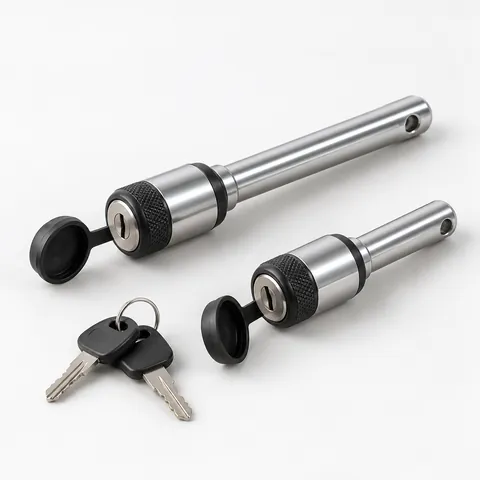 Receiver hitch pin locks
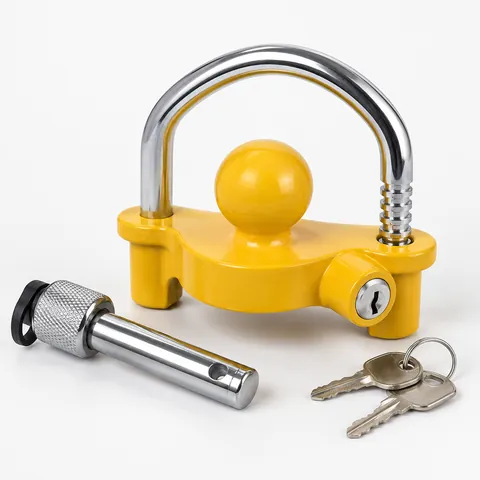 Universal trailer locks
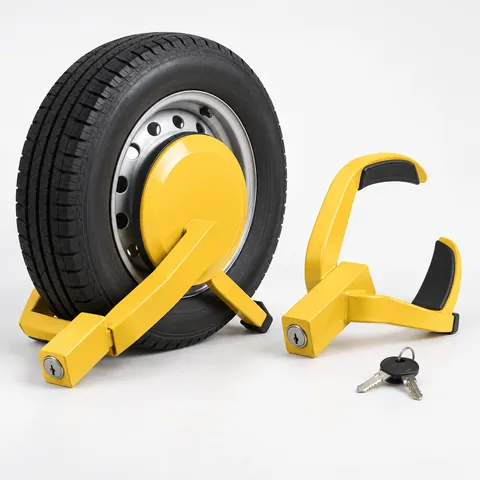 Trailer wheel locks
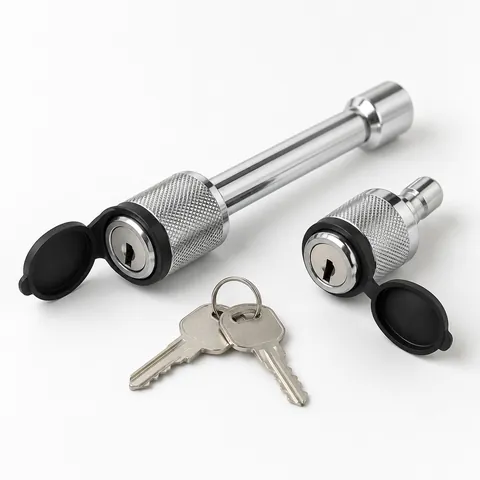 Keyed-alike hitch lock sets
Layers
- Coupler lock on the unhitched trailer.
- Wheel lock or boot.
- Chain through a wheel to a fixed point.
- Good lighting and visible location.
- Records: VIN, photos, receipts.
See universal trailer locks and wheel locks.
How do I choose the right lock for a trailer?
Start with the part a thief must use first: the coupler. A coupler lock should match the coupler style and ball size, sit tight against the latch area, and leave little room for a pry bar. If the trailer uses a 2-inch coupler, do not assume every lock labeled for trailers will fit; check the lock’s stated coupler range and the shape of your latch before buying.
For trailers that are parked in a driveway, side yard, storage lot, or jobsite, add a wheel lock or boot. A wheel lock is not a replacement for a coupler lock; it protects a different weak point. It makes the trailer harder to roll away even if someone defeats the coupler or tries to drag the trailer onto a flatbed.
Use a hitch pin lock when the trailer is connected to a tow vehicle or when a removable ball mount is stored in the receiver. Pin locks are sized by receiver class and pin diameter, so confirm whether your setup uses a 1/2-inch or 5/8-inch pin before ordering. If you are comparing options, use pin locks by diameter rather than buying by appearance alone.
- Match the lock to the exact coupler, receiver, or wheel size instead of relying on the word universal.
- Look for a design that covers the latch or pin access point with minimal exposed shackle.
- Favor weather-resistant covers if the trailer sits outside year-round.
- Check that the key can turn when the lock is installed; some tight tongue boxes or jack mounts block access.
- Keep one spare key away from the tow vehicle so a lost truck key ring does not strand the trailer.
What is the best way to lock a trailer at home or in storage?
The best home setup makes the trailer slow, awkward, and visible to steal. Park so the tongue faces a wall, garage door, fence, or another vehicle when possible. If the tongue cannot be reached easily, the thief has to reposition the trailer before even attacking the lock.
Use the coupler lock first, then add a wheel lock on the most visible wheel. If you can chain the frame or wheel to a fixed anchor, keep the chain off the ground and remove as much slack as possible. A loose chain on the pavement gives more room for cutting tools and leverage.
For long-term storage, avoid leaving the trailer in a ready-to-tow position. Lower the tongue jack enough that the coupler is not at normal ball height, turn the jack handle away from easy access if possible, and remove loose accessories such as ramps, spare tire covers, winch handles, or tie-downs. A thief may steal parts even if the whole trailer stays put.
- Take clear photos of all four sides, the tongue, the coupler, the VIN plate, the license plate, and any unique dents, welds, decals, or toolboxes.
- Write down the VIN, plate number, tire size, coupler size, and lock key codes if provided by the maker.
- Store copies of the title, bill of sale, receipts, and photos in cloud storage or email them to yourself.
- Check the trailer after storms, nearby construction, or storage-lot access changes, because locks can be damaged before an attempted theft is obvious.
If the trailer is kept in a shared storage yard, ask how access is controlled and whether cameras cover your row. A strong lock helps, but poor storage practices can erase much of that benefit. Choose a spot with light, regular traffic, and a camera angle rather than the most hidden corner.
Which trailer security layers work for different situations?
The right mix depends on where the trailer sits and how often you move it. A daily-use utility trailer needs locks that install quickly and tolerate dirt. A seasonal boat or camper trailer can use heavier layers because you are not removing them every morning.
| Situation | Useful layers | Trade-off to expect |
|---|---|---|
| Connected to tow vehicle | Hitch pin lock, locked safety chains if appropriate, locked cargo or toolboxes | Pin size must match the receiver, and the lock needs room to clear the bumper and chain loops |
| Parked unhitched at home | Coupler lock, wheel lock, blocked tongue access, lights or camera coverage | Tighter parking may be less convenient when you need to hook up |
| Storage lot | Coupler lock, wheel lock, chain to fixed point where allowed, full records | You may be limited by lot rules on anchors, chains, or where you can park |
| Jobsite | Visible wheel lock, coupler lock during off-hours, marked equipment, locked ramps and tools | Locks must handle mud and repeated use, so key access and cleaning matter |
| Long-term seasonal storage | Multiple locks, removed small accessories, periodic inspection | More layers take longer to remove and require better key management |
If you need to secure more than one trailer or you often switch between tow vehicles, keyed-alike locks can reduce confusion. A set can cover the receiver pin, coupler, and sometimes latch points with one key pattern. Compare keyed-alike hitch lock sets only after confirming each lock in the set fits your actual hardware.
Visible layers matter because many trailer thefts are opportunistic. A thief who sees a coupler lock and a boot has to decide whether to spend extra time in the open. Hidden measures, such as records and distinctive markings, help recovery and proof of ownership, but they do not slow the first attempt.
How do I install and maintain trailer locks so they keep working?
A poorly fitted lock can look secure while leaving enough space for twisting, prying, or simply towing from a different contact point. After installation, pull on the lock by hand, work the coupler latch, and look for large gaps. The lock should not block your ability to inspect the coupler for damage or wear.
For a coupler lock, close the coupler latch as you would when the trailer is unhitched, then install the lock according to the maker’s instructions. Make sure the ball-shaped portion or shield seats fully under or around the coupler. If the lock can be rotated into a position where the latch is exposed, try a different design.
For a wheel lock, choose the wheel that is easiest for others to see and hardest to access with a jack. Tighten the lock against the tire or rim as directed, then check that it does not press on a valve stem, brake line, or fender. If you are shopping for that layer, compare trailer wheel locks by wheel diameter, tire width, and clearance around the fender.
Maintenance is simple but important. Rinse off road salt, mud, and grit before they pack into the keyway. Use a lock lubricant suitable for outdoor locks when the key starts to feel rough, and avoid forcing a frozen or gritty cylinder. Replace a lock that has a cracked body, bent shackle, seized cylinder, missing dust cover, or damage from a prior tampering attempt.
- Test every lock before a trip, not at the campsite, ramp, or storage gate.
- Keep lock keys separate from trailer paperwork that includes your address and VIN.
- Do not leave a spare key hidden on the trailer tongue or in an unlocked toolbox.
- After towing in rain or salt, unlock and relock the device once it dries to confirm the cylinder still moves.
- If several people use the trailer, label keys by function without writing the trailer address on the tag.
Frequently asked questions
Can a trailer still be stolen with a coupler lock on it?
Yes. Any single lock can be defeated with enough time, tools, and privacy. A coupler lock is still worth using because it blocks the easiest hookup method and works better when paired with a wheel lock, tight parking, and good visibility.
Should I lock the trailer when it is attached to my truck?
Yes, use a hitch pin lock that matches your receiver and pin diameter. It helps keep the ball mount or hitch accessory from being removed while the trailer is parked, but it does not replace locking cargo, ramps, or toolboxes.
Is a wheel lock better than a coupler lock?
They solve different problems. A coupler lock makes it harder to attach the trailer to another vehicle, while a wheel lock makes it harder to roll or move the trailer. For unattended parking, using both is stronger than choosing one.
Where should I park a trailer to reduce theft risk?
Park in a well-lit, visible spot with the tongue blocked by a wall, fence, vehicle, or other obstacle when possible. Avoid isolated corners where someone can work without being seen. If you use a storage facility, choose a space covered by cameras and regular traffic.
What information should I keep in case my trailer is stolen?
Keep the VIN, license plate number, title or registration, purchase records, lock key codes, and current photos. Photograph unique marks, welds, dents, accessories, and the coupler area. Store copies somewhere you can reach even if the tow vehicle or trailer paperwork is gone.
Disclosure: As an Amazon Associate I earn from qualifying purchases. This site may earn a commission when you buy through its links, at no extra cost to you. Product details come from public manufacturer information; always check the merchant page for current specifications and prices. We have not hands-on tested the products described here.